

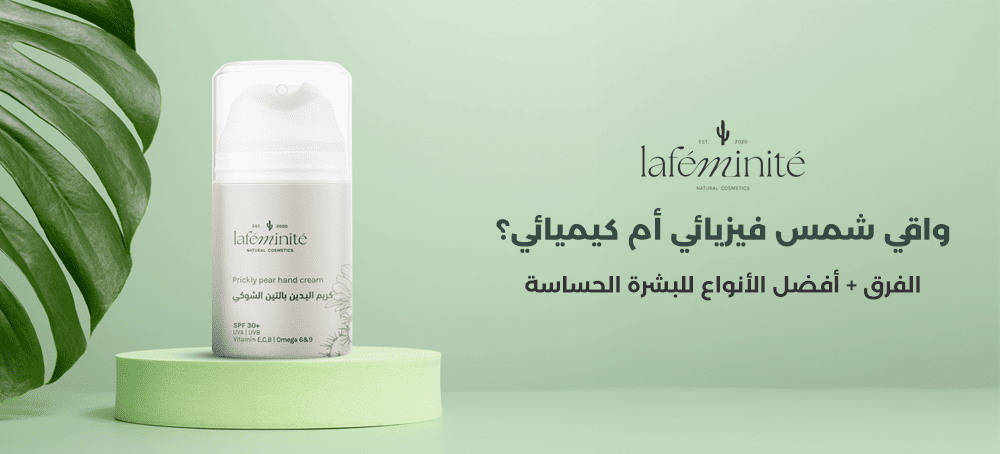
When talking about sunscreen, we often find ourselves faced with two options: physical sunscreen or chemical sunscreen. But which one is more suitable for you, especially if your skin is sensitive or prone to redness? In this article from Laviment Store, we will learn about the difference between them, when to choose physical sunscreen, and the best types.
What is sunscreen?
Sunscreen is an essential product in any skincare routine . Its function is to protect the skin from the harmful effects of ultraviolet (UVA and UVB) radiation emitted by the sun. This radiation can cause sunburn, excessive tanning, premature wrinkles, and even increase the risk of skin cancer with prolonged exposure.
The sunscreen forms a protective layer on the skin:
- Either by reflecting the rays (as in physical sunscreen).
- Or by absorbing it and converting it into harmless heat (as in a chemical protector).
For this reason, dermatologists recommend using sunscreen daily, even on cloudy days or indoors exposed to light, because it is not only a means of protection but also of maintaining youthful and radiant skin in the long term.
At Laviment, we offer you a selection of gentle physical sunscreens for sensitive skin, with a light formula that provides balanced sun protection with all-day hydration and comfort.
physical or chemical sunscreen
When choosing a suitable sunscreen, many people are confused between physical sunscreen and chemical sunscreen, especially since each type has a different mechanism of action in protecting against ultraviolet rays. Knowing this difference helps you choose the most suitable type for your skin, whether it is sensitive, dry, or combination. To learn more about it, here is some important information:
1. Physical sunscreen (Mineral Sunscreen)
It relies on natural minerals such as zinc oxide and titanium dioxide to form a reflective layer on the skin's surface, which reflects ultraviolet rays and prevents them from penetrating the skin.
Its advantages:
- Safe for sensitive and allergy-prone skin.
- It takes effect immediately upon application.
- It reduces inflammation and facial redness.
Its drawbacks:
It may leave a light white film on the skin, but many modern products have been developed to be transparent or easily absorbed.
2. Chemical Sunscreen
It works by absorbing ultraviolet rays and converting them into heat inside the skin, and usually contains ingredients such as: oxobenzone, avobenzone, or octocrylene.
Its advantages:
- It is gentle on the skin and does not leave a white residue.
- Easy to use with makeup.
Its drawbacks:
It may cause irritation to sensitive skin, and may require 15 to 20 minutes before sun exposure for it to take effect.
Which is better for sensitive skin?
If you suffer from sensitive skin or acne, the best option is a physical sunscreen. Its natural mineral formula reduces the likelihood of sensitivity and provides immediate and safe protection. If your skin is normal and you are looking for a light and transparent texture, a chemical sunscreen may be more suitable for you.
Benefits of sunscreen of all types:
Using sunscreen is not a luxury, but an essential step in your daily skincare routine. It's not just for summer or sunny days; it remains necessary in all seasons, even in winter or when sitting near windows. Among its most prominent benefits are:
- Prevention of wrinkles and fine lines: Reduces signs of premature aging and maintains skin freshness.
- Evens out skin tone: Prevents pigmentation and maintains the original, uniform skin tone.
- Reducing dark spots: Reduces the effects of aging and continuous sun exposure.
- Reducing the risk of skin cancer: It forms a barrier that protects the skin from the harmful effects of ultraviolet radiation.
- Prevents sunburn: Protects the skin from redness and inflammation caused by prolonged sun exposure.
With Laviment products, you can get a gentle and effective physical sunscreen that gives you comprehensive protection with special hydration suitable for sensitive and combination skin, so you can live your day safely and confidently.
Best sunscreen for sensitive skin
If your skin is sensitive and easily irritated, choosing the right sunscreen is essential to protect it from the sun's rays without causing any inflammation or redness. The best sunscreen for sensitive skin combines:
- Protection rating (SPF 30 – SPF 50) to provide an effective barrier against long and short ultraviolet rays.
- A gentle formula, free from perfumes, parabens and alcohol to reduce the chances of allergies or dryness.
- Its light, easily absorbed texture leaves no greasy residue and does not clog pores, making it smooth on the skin.
SPF 50 vs SPF 100 – Which one should I choose?
When choosing sunscreen , you often get confused between SPF 50 and SPF 100, especially if you are looking for the best protection for your skin.
SPF 30 is considered sufficient for daily protection indoors or during short trips, as it blocks approximately 97% of harmful sun rays.
SPF 50 is the most balanced option when spending a lot of time outdoors, such as shopping or exercising, as it blocks about 98% of the rays.
SPF 100 offers slightly higher protection (around 99%), but it is not much different from SPF 50 in practice, and its use is often only appropriate for people with very sensitive skin or when exposed to direct and prolonged sun.
In summary: SPF 50 is most suitable for most people, while SPF 100 may only be an additional option in extreme conditions such as traveling to beaches or desert areas.
Is a natural sunscreen effective?
Some products rely entirely on natural ingredients like mineral oils and white clay. While they may offer some partial protection, they don't replace a proper physical or chemical sunscreen. Therefore, if you have sensitive skin and prefer natural formulas, choose a physical sunscreen with mineral extracts, as it's the safest option.
Try Lafiminite sunscreen . Don't neglect sunscreen if you're looking for healthy, protected skin. Choose Lafiminite's physical sunscreen now, with its gentle formula suitable for sensitive skin, and enjoy effective sun protection without worrying about irritation.
What is the appropriate SPF for daily use?
-SPF 30: Sufficient for daily protection indoors or during short sun exposure, as it blocks approximately 97% of harmful rays.
-SPF 50: Best suited when spending a long time outdoors, such as walking, shopping, or exercising, as it provides protection of approximately 98%.
-SPF 100: Used in very special cases, such as traveling to beaches or working in direct sunlight for long periods, but it is not very different in practice from SPF 50.
Summary: For most people, SPF 30–50 is ideal for everyday use.
Frequently asked questions about sunscreen
What is the difference between a physical and a chemical condom?
The main difference lies in the mechanism of protection from sunlight, simply put: the physical one prevents the rays from entering, while the chemical one absorbs and dissipates them.
Does physical sunscreen leave a white film on the face?
Yes, some older types of physical sunscreen may leave a visible white film due to the reflective minerals. My advice is to spread it well on the skin and wait a few minutes for it to become unnoticeable.
Which sunscreen is best for sensitive skin?
If you have sensitive skin or are prone to redness and acne, a physical sunscreen is the safest option because it's free of irritating chemicals. Some chemical sunscreens, on the other hand, can cause sensitivity or clogged pores in some people.
Therefore, doctors often advise staying with a physiotherapist, especially for those with active eczema or acne.
Can it be used with makeup?
Absolutely. You can apply physical sunscreen as the final step in your skincare routine, followed by makeup. It's best to wait 10 to 15 minutes after applying the sunscreen to allow it to absorb and spread evenly, then proceed with your makeup routine as usual.
Some modern types come with a technology that makes them work as a makeup primer, reducing shine and setting the foundation for a longer period.
Very important topics:
- Blue Indigo Body Butter: The secret to brightening and deep moisturizing for a radiant, even complexion
- Moroccan indigo scrub is the secret to skin lightening
- Moroccan indigo soap: The secret to deep and smooth body lightening and unifying skin tone
- Important tips for protecting skin from wrinkles